Best air compressors for your garden tool box

Best air compressors for your garden tool box

There are so many good uses for an air compressor in your garden that I don’t even know really way to start so we’ll go with the first thing you need an air compressor for which is basically to help your kids inflatable toys in a back garden in perfect order, as well as the pool and any other accessories like that you might have in the back garden. The uses for an air compressor on the back Garden’s almost limitless end for example you might even need one just to pump up the car tyres but in his article going to go through all the best air compressors and their best uses and what you can do with them and how they are going to help you in your garden and why you should only have one in your garden tool box.

Air Compressor
Air Compressor

Most air compressors for use as a gardener are basically built using electric power. You don’t really need anything petrol powered or higher than that for most of the applications around the home. So just a simple one that you plug into the wall is more than enough. Normally something like a 5 or 10 litre capacity is more than adequate just to get some of the simple jobs like blowing up your air beds or perhaps blowing up the kids toys in the back garden done. Most of these tasks are extremely straightforward so you don’t really need anything overly large and so here is a list of the more sensible ones for your back garden.

Oasser Tyre Inflator Air Compressor

The Oasser Tyre Inflator Air Compressor is an incredible little compressor, it actually doesn’t even run off mains electric, just cordless power. It actually runs directly off a battery and is perfectly designed to just blow up the tires on your car. Basically, you can actually plug it directly into one of your kids inflatable toys as well, it’s actually perfectly designed for a minor applications around the home and garden. But at the same time it also has enough power to pump up a tyre on a car and we know that can be something like 40 or 50 psi which means that it’s got plenty of go if you needed to but overall; the ideal accompaniment to have around home because it’s rather small and compact and it’s easy to charge and you can take it anywhere with you do you want to.

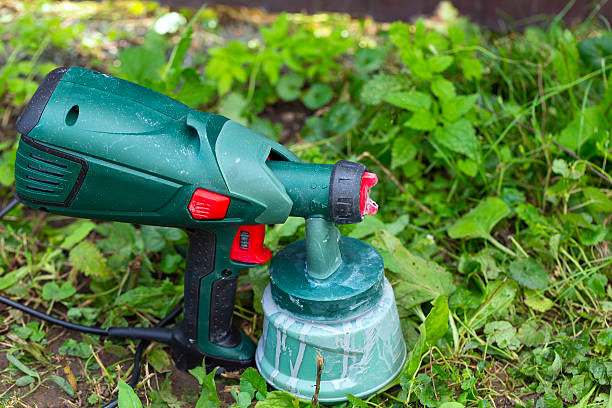
Air Compressor - Garden
Air Compressor – Garden

Oasser Tyre Inflator Air Compressor has a rating of 230 PSI but I’m not entirely sure about that because that’s quite serious PSI and I’ve never pushed it that far, but either way that’s what they say and it’s just 1.25 kg which is tiny and means that is very portable for you if you want to take it round to the car with you and then if you had a blowout or a tyre issue then you’ve got this which will save you if you it need to. It comes with a large accessory set and that is also part of the deal that you can use it with the kids inflatables in the back garden as well. One of the best things that I like about this is the fact that you can charge from a 12v battery which means it is absolutely portable an ideal for the car and home garden sceanio.

One of the neat little gadget it’s got on it is the fact that it can tell you exactly what PSI are in the car tyres or inflatable that you’re working on, at that particular time. So if you’re doing something there’s a little bit more delicate like inflating your bicycle tyre then you can know that you’re not going to over inflate and blow out the tyre. This is really handy and a very nice little piece of equipment and given the price is extremely competitive; it’s a very nice piece of equipment overall.

If you think it’ll be too lightweight for you then I’ve got something a little bit more heavy-duty lined up in the next review and that is the Wolf Dakota 90 Litre, 3HP.

The Wolf Dakota 90 Litre, 3HP Air Compressor – Garden Decking Perhaps?

I thought I’d review a more traditional air compressor because he basically has far more pasty and if you’ve got some jobs that little bit more awkward in there around the garden and house then this one will have two extra power that you need to get it done. I’m not entirely sure what option might have to get done saying that, but overall if we could do with something with a bit more guts than this is the one for you. That’s why I really like it because let’s just say for example you’re going to install some decking and you had an air drill or an air hammer, then you would find yourself in a situation where this can give you a good 10 or 15 drives without needing a charge.
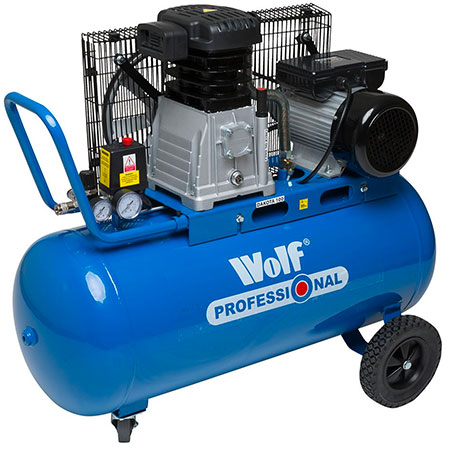
Wolf Dakota 90 Litre

Obviously the first one that we reviewed has no such capacity and if you’re doing something like decking in the garden then you won’t be able to use it. But this one is absolutely ideal for that type of application and with it being relatively lightweight and quite powerful with so it’s pretty much ideal and has a perfect little 3 horsepower engine and it runs on slow cylinders which means it runs nice and quietly. The air displacement is something around about 400 l a minute which is more than enough to do a little bit of decking with air compressor tools.

Overall these couple of options will help you get through the best air compressors and air tools to put into your garden tool box.
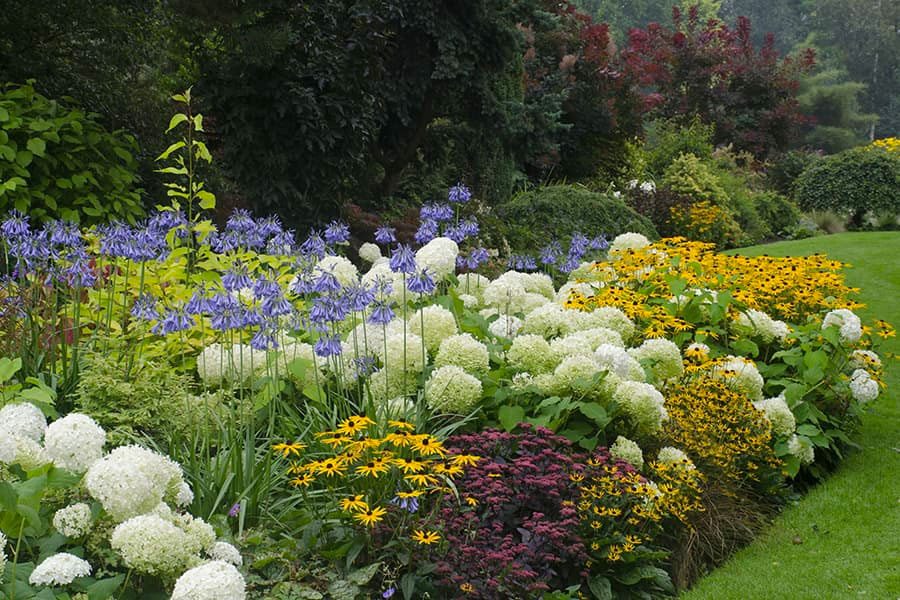
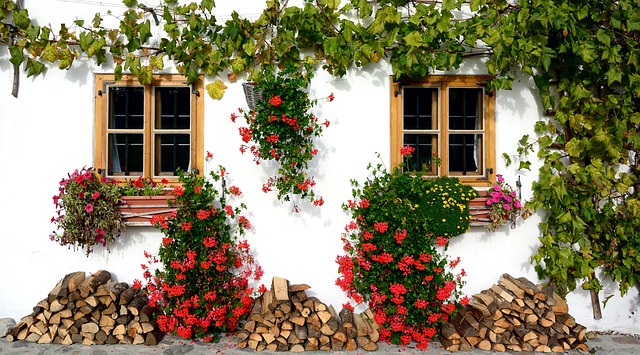
Make a great first impression with your garden

Make a great first impression with your garden

As the saying goes, “You never get a second chance to make a first impression.” That adage also applies to the entrances of your home and garden. Thresholds set up a feeling of anticipation and give hints of what guests can expect as they move into your private realm. Here’s how to make sure your entry extends a warm welcome:

Start at the property line. You may think of a garden gate or front door as your entrance, but guests get their first impression the minute they step onto your property. Place clear directional guides—such as a wide walkway, an arbor, a pair of containers, or large matching shrubs—at the perimeter of your property to direct visitors’ attention to the entrance.

front-house-garden

If the door or gate is not in immediate view when visitors approach, help steer them in the right direction with additional points of punctuation along the way, such as rhythmically spaced shrubs lining the walk or a prominent focal point that draws them to the next turn in the path.

Create a smooth transition.

When guests reach your door, greet them with an area that mixes indoor and outdoor elements. By placing a chair, bench, or cushioned settee near the entry, you help soften the line between your home and garden. Weather-resistant fabrics and rugs, outdoor lamps, and decorative containers filled with colourful plants create a look that blends interior comfort with the beauty of nature. The mix offers a relaxed, “sit-a-while” feel that also draws your family outside to enjoy the scenery. These in-between spots enlarge the feeling of adjacent areas indoors and out, making both feel larger.

Build continuity. To strengthen the connection between your home and garden, repeat the same materials, colours, and architectural elements. For example, if your home’s porch has columns, duplicate that element in an arbor at the entrance to your garden. If your home is brick, incorporate the same material in steps, pillars, or planters in the entry. You’ll be amazed how this technique unifies the look of your property.

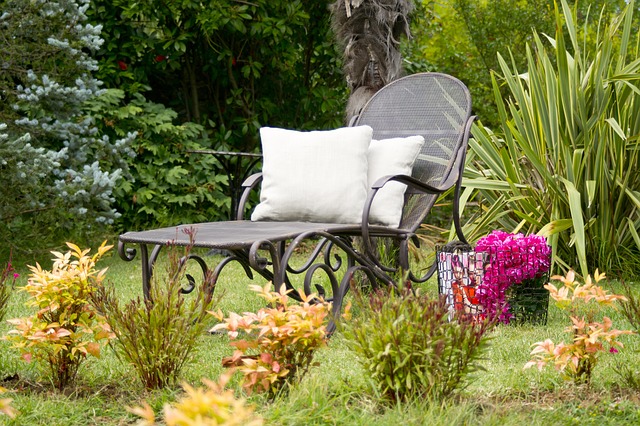
sunbeds in the garden

As you assemble plants, containers, furnishings, and objects to accent your home’s entryway, choose items that match the style of the house. Two wooden half-barrel containers would be as out of place in front of a Victorian home as a pair of highly ornate iron urns at the entrance to a rustic cabin. When the décor at the entrance complements the colours and style of the house, it makes the transition between indoors and outdoors smooth and cohesive.

Make it personal.

Surprise and delight guests by displaying your personality and sense of humour in your entryway. Since people often stop at a gate or door before they enter, they are more likely to notice things there. Add items that reveal something about you, such as a plaque with a favourite saying, a memento from a trip, a colourful hat, or a handmade object. One of my clients had a large ceramic goose that welcomed guests to her front door. All year long, she costumed the goose with seasonally appropriate outfits for the amusement of her visitors.

Keep it easy. For gardeners with limited time, there are many new products that take the work and worry out of dressing up your doorways. Beautiful outdoor furniture that can stand up to the elements is available in styles and materials that complement interior furnishings. And striped awning fabric is no longer the only choice for pillows, cushions, and tablecloths. Rugs, lighting, clocks, and art all come in weather-resistant materials. Self-watering containers, lightweight faux stoneware pots, and low-maintenance plants make amplifying your entryway even easier.

Layer Your Look

Gardening

Here’s how to use containers as a quick and easy way to enhance your entry:

  • Lead visitors up flower-strewn steps to your doorway by positioning colourful containers along the way. Make sure your stairway is wide enough to allow visitors to get past the containers as they enter your home.
  • Welcome guests with an eye-level bouquet of fragrant and colourful flowers in a hanging basket near the door, or on a table just outside the threshold.
  • Frame the entry with a pair of matching containers to give it more importance and architectural interest.

Best bits of Autumn In the Garden

Best bits of Autumn In the Garden

Spark up your late-summer garden with plants that add colour and interest even as fall’s cooler temperatures arrive. By choosing plants that offer features such as colourful foliage, attractive seed pods, and interesting textures, you can create a “second spring” in your garden.

Here’s how to choose plants that will keep your garden looking its best from now until frost:

autumn garden

Clean things up. 

By the time September rolls around, many plants have lost their lustre. Annuals often look leggy and worn, many summer perennials are finished blooming, and foliage is tattered and torn. Take a close look at your flower borders and containers with an eye for what can stay and what must go. Clean up and pinch back plants that will revive during the cooler days of fall (such as petunias), and pull out annuals that are past their prime.

Take an inventory. 

autumn leaves on the ground

Now you’re ready to see the “blank spots” that could use a splash of colour or some added texture. Make a list of the empty spots in your garden and how many plants you need to fill each gap. If you don’t have specific plants in mind, write down a general description of plants that would be ideal for each spot. Include colour, height, and growing conditions. For example, your shopping list may look like this: three 24- to 32-inch full-sun plants with lavender flowers and one grey-green 18-inch shade-loving plant. Your list of general characteristics makes shopping much easier, and will come in handy if the specific plants you have in mind are not in stock.

Heighten visual interest.

As you make your list, keep in mind that plants with contrasting shapes, textures, and colours make good partners. Pair foliage with flowers: A classic combination is a feathery ornamental grass with the bold blooms of ‘Autumn Joy’ sedum. This creates more visual interest than a group of flowering plants. Look for opportunities to use plants with interesting textures, such as lacy ferns and waxy-leafed European ginger. Choose plants with flowers or foliage in autumnal shades of orange, reddish brown, purple, maroon, and butterscotch. These plants create a colour bridge between your summer and fall garden. If you need to fill in a spot between two clashing colours, rely on harmonising shades of grey to soften the contrast.

Rely on containers.

In established flower beds, you may prefer not to disturb the ground with more plantings. An easy solution is to pot up containers and place them throughout the garden. You can choose plants and pots in bold colours to create dramatic focal points, or use more subtle shades that will quietly blend into your border. Revamp existing containers next to entrances, decks, and patios by slipping in some fresh plants, or add more pots and fill them with autumnal interest. Take advantage of seasonal accents such as gourds and pumpkins for an extra punch of colour.

Early Autumn Tips

apple at autumn

Since temperatures can remain high and rainfall low in early autumn, take special care to make sure your garden stays beautiful throughout the fall.

  • Water new plants frequently to encourage the development of strong root systems. • Give established plants 1 inch of water per week.
  • As you remove spent blooms from your plants, let some flowers develop seed pods for naturalising, such as larkspur, nicotiana, and cleome. Leave others for their interesting form, such as hydrangea, coneflower, and ornamental grasses.
  • Continue weeding to keep flower beds tidy.
  • Maintain 2 to 3 inches of mulch around plants.

Monarch and Milkweed Butterflies

Monarch and Milkweed Butterflies

With their bright orange and black wings, monarchs are one of the most easily recognisable butterflies. They are found coast to coast in the United Kingdom, and they’re one of the species most likely to show up in a butterfly garden. But there’s more to the story. The monarch in your garden is like a long-haul trucker stopping for a meal—this little creature travels hundreds or thousands of miles in its lifetime. And you can be part of this butterfly’s incredible journey by planting milkweed, the one plant absolutely essential to the monarch’s life cycle.

ิีbutterfly on the flower

Be part of a massive migration. Monarchs are well known for their long-distance, multigenerational seasonal migration. Each fall, monarchs fly thousands of miles on their delicate wings to ancestral roosting sites, where they spend the winter months semi-dormant in large colonies. Western monarchs migrate to dozens of locations along the California coast, where they cluster in native trees and the ubiquitous and exotic eucalyptus.

East of the Rockies, monarchs make a more dramatic migration.

They fly from southern Canada and the northern United States all the way down to a handful of high-elevation sites in the mountains of Mexico, where they roost in the millions. It’s breathtaking to see so many monarchs hanging in the trees that their collective weight sometimes breaks branches, and to hear the sound of millions of butterfly wings flapping on warm days when the monarchs take flight to sip water from puddles.

One of the most fascinating aspects of this migration is that it takes place over several generations. The last generation of the summer hatches at the northern limit of monarch range. That generation delays sexual maturity and, triggered by the changing season, begins the 3,000-mile journey to Mexico, where they spend the winter. In early March they reach sexual maturity and head north, mating as they go. Some get as far as southern Texas, where the females lay eggs and die. The next generation hatches and, after completing metamorphosis, heads north and east and repeats the process.

Over three or four more generations, they repopulate the rest of the continent east of Rockies, until the last generation of the season begins the southern migration again. A similar, though shorter, migration happens west of the Rockies as monarchs overwintering in California head north.

Understand the milkweed connection.

ิีbutterfly on the flower

Butterfly gardens must provide food for both adults and caterpillars. Monarch caterpillars feed exclusively on milkweed, a double-duty plant that also serves as a nectar source for adult butterflies. Milkweed also has a sap that contains alkaloids, which make the insects taste bad to birds and other predators. The striking coloration of the monarch evolved as a warning that tells predators, “Don’t eat me; I taste bad.”

Make a monarch garden. Start your monarch garden by planting milkweed species such as swamp milkweed (Asclepias incarnata), butterfly weed (A. tuberosa), antelope horns (A. asperula), and common milkweed (A. syriaca). If possible, choose a species that’s native to your region.

Plant native perennials to provide nectar from spring through fall.

ิีbutterfly on the flower

Because monarchs migrate, late-season nectar is particularly important. Some good choices include coneflowers (Echinacea spp.), ironweed (Vernonia spp.), Joe-pye weed (Eupatorium spp.), sedum (Sedum spp.), verbena (Verbena spp.), asters (Aster spp .), and goldenrod (Solidago spp.).

Add some dense shrubs where the butterflies can hide from hard rains and strong winds. Don’t use insecticides, which can kill butterflies. Then sit back and wait for these orange and black beauties to arrive.

Avoid Butterfly Bush

Butterfly bush (Buddleia spp.) has long been a staple for gardeners trying to attract butterflies, and there’s no doubt that butterflies find the shrub irresistible. An import from Asia, butterfly bush comes in many colours and grows in a variety of conditions. However, butterfly bush has become invasive in some parts of the country, notably the Pacific Northwest and the Mid-Atlantic region. Choose native perennials and flowering shrubs instead.